How Net Worth View works
-
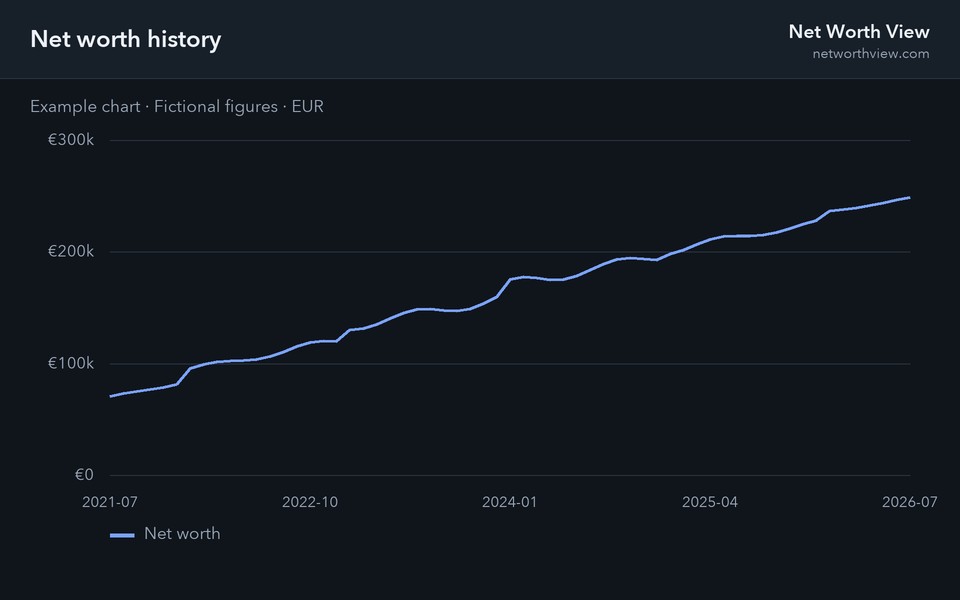
List your cash, investment, property, pension and loan accounts, then record a
balance snapshot whenever you like — monthly works well. Multiple
currencies are converted automatically.
-
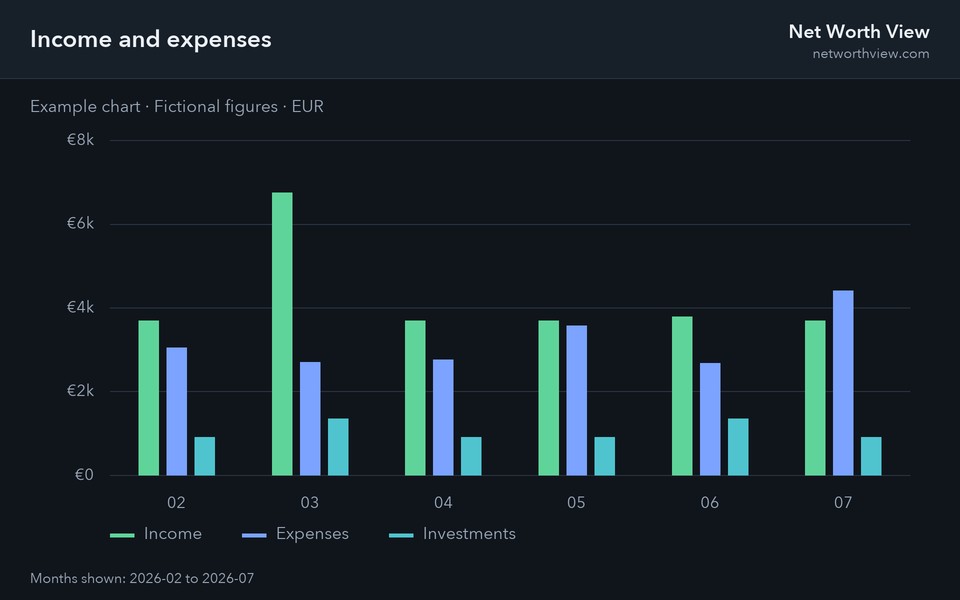
Log income, spending and investments by category to see your savings rate and a
flow chart of where the money goes each month.
-
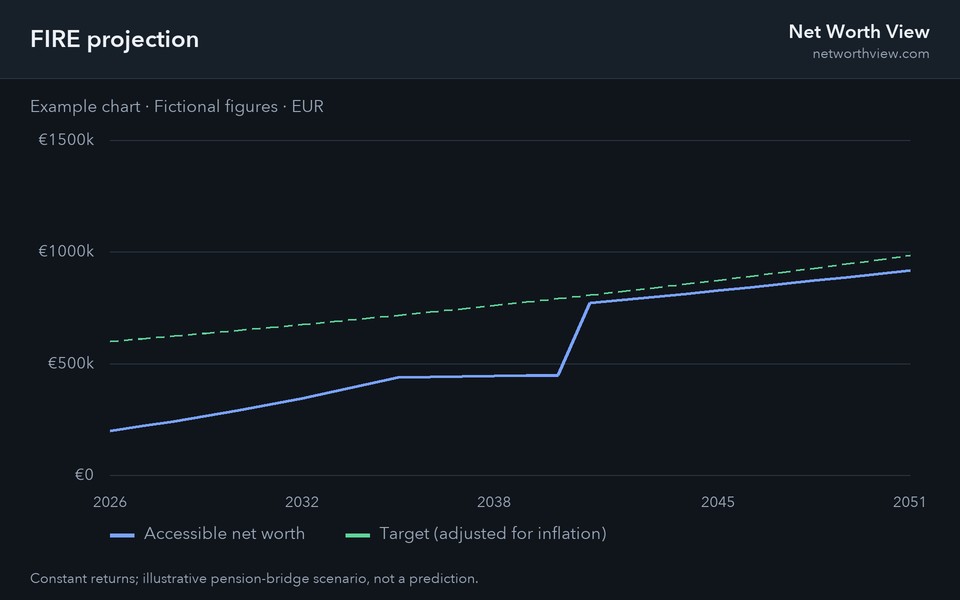
Set growth rates per asset class, contributions and debt repayments
to explore your future net worth — with an inflation-adjusted view, a
drawdown and a FIRE target.
Want to see it filled in first?
Open the live example — five years of snapshots across
cash, investments, pension, property and a mortgage, categorised cash
flow, and a 35-year projection.
Private by design
Your financial data stays on your device: there is no account, no server-side
storage, and nothing to sign up for. Use Download backup for a full
backup you can re-import anywhere, or Download CSV to open your
balances and cash flow in a spreadsheet. See the
calculation methodology and assumptions for formulas,
data sources and projection limitations.
Frequently asked questions
Where your financial data lives, how backups and CSV imports work, tracking
accounts in several currencies, and how the projection compares your balances with a target — all answered on the
frequently asked questions page.